Can International Students Attend a U.S. Public High School?
Yes — but only at SEVP-certified schools, only in grades 9–12, only for 12 months total, and only if you pay the district's full unsubsidized cost.
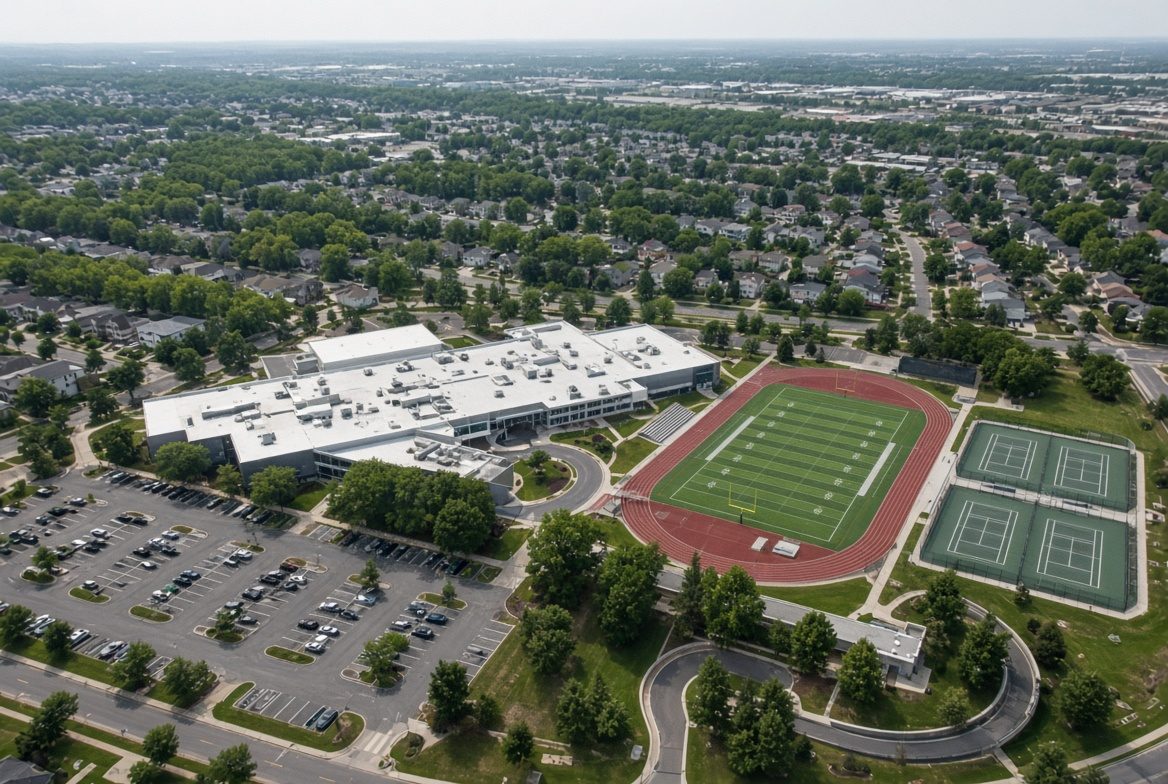
Yes — international students can attend an American public high school on an F-1 visa. But the rules are narrower and stranger than almost any family expects, and the distance between what people assume and what federal law actually says is exactly where the expensive mistakes happen.
Three conditions apply, and all three surprise people: only some public schools can enroll you at all, only grades 9 through 12 are open, and you get twelve months — total, for life — which you pay for at the district's full cost. Here's how each one works.
The short answer, in one table
| What federal law says | |
|---|---|
| Which public schools | Only those that are SEVP-certified — and only secondary schools may even apply |
| Which grades | 9 through 12 only. Public elementary and middle schools cannot enroll F-1 students at all |
| How long | A maximum aggregate of 12 months across every public high school, for the student's lifetime in F-1 status |
| What it costs | The full, unsubsidized per capita cost of your education, paid to the district, with proof shown twice |
| Afterwards | You may transfer to a private high school or to an SEVP-certified college — but not to another public high school |
Everything below is the detail behind those five rows.
Not every public school can enroll you
A U.S. school cannot accept an international student simply because it would like to. It has to be certified by the Student and Exchange Visitor Program first, and for public schools that door is only half open: a public school at the secondary level — grades nine through 12 — is eligible to apply for certification. Public elementary and middle schools are not eligible to apply at all, and cannot enroll F-1 students in kindergarten through grade eight under any circumstances.
The practical consequence is one of scale. There are roughly twenty-four thousand public high schools in the United States, and only a small fraction have gone through certification — it's a real administrative undertaking, and a district has to want international students enough to do it. So "we'd like a public school in California" is not a plan. The list of public schools that can actually say yes is short, and it's the list you have to work from.
If a school tells you it takes international students, the question to ask is direct: are you SEVP-certified, and can your designated school official issue an I-20? If the answer is anything other than a clear yes, the school is describing a different program than the one you're asking about.
Twelve months — and it's a lifetime total
This is the rule that catches families hardest, because of the word aggregate.
F-1 students may study at a public high school for a maximum aggregate period of 12 months. That twelve months covers every public high school you attend in F-1 status, added together, across your whole life. It is not twelve months per school. It is not renewable by switching districts, or by going home for a year and coming back. It includes school breaks and annual vacation. Once it's used, it's gone.
One useful exception: time spent at a public high school in a status other than F-1 does not count against the limit. A student who attended a U.S. public school as the dependent of a parent on a work visa, for instance, hasn't spent any of their twelve months.
And when the twelve months run out, the road doesn't end — it forks. A student may transfer to a private high school, where federal rules impose no time limit at all, or transfer to an SEVP-certified college or university. What they cannot do is enrol at another public high school. This is why a public year is structurally a one-year experience and a multi-year U.S. education is, by design, a private-school path.
You pay the full, unsubsidized cost
American public schools are free for the families who live in the district, because local and state taxes have already paid for them. An F-1 student hasn't paid those taxes — so federal law requires them to compensate U.S. taxpayers by paying the full, unsubsidized per capita cost of their attendance.
That phrase is worth unpacking, because it isn't tuition in the ordinary sense. There's no price list and no market rate. The district calculates what it actually spends to educate one student for one year — using its own figures or federal education data — and that is the number you owe. Two districts an hour apart can produce very different figures, and neither is negotiating.
Then you have to prove you paid it. Proof of that payment, along with the I-901 SEVIS fee receipt, is presented at the visa interview and again at the port of entry. Two checkpoints, same documents. Keep them together and keep them reachable — not packed in a checked bag.
"But my friend studied at an American public school for free"
They probably did — on a J-1 exchange visa, not an F-1 student visa. This is the source of most of the confusion in this topic, and it's worth being clear about, because the two programs look identical from the outside and are governed by entirely different rules.
The twelve-month cap and the reimbursement requirement apply to F-1 status specifically. A student on a J-1 secondary-school exchange isn't subject to either one. They're placed at a public school by a designated sponsor organization, hosted by a volunteer family, and the year runs on the exchange program's rules rather than on the student-visa rules.
What they give up is choice. On J-1, the sponsor decides the school, the town, and the host family — you generally don't pick any of them, and there's no diploma track. On F-1, you choose the school and apply to it directly, and its acceptance is what produces your I-20.
So when someone tells you their exchange year cost a fraction of what you've been quoted, they're not describing the same product. Ask which visa they were on. That one question explains the entire price gap.
Is a public school year actually a good idea?
Often, yes — for the right student, with clear eyes about what it is.
It suits you if you want one authentic year in an ordinary American high school, the cost matters and a boarding school is out of reach, you want a big school with a wide range of activities and a genuinely local student body, and you're not chasing a U.S. diploma. Public high schools are where most American teenagers actually are, and the year is as real as it gets.
It doesn't suit you if you want a U.S. diploma — twelve months rarely satisfies a school's graduation requirements — or a multi-year education, or the small classes and dedicated international support that private schools build their programs around. It's also worth confirming athletics early: sports eligibility for international students comes from the state athletic association and the league, not from the visa, and public school leagues have their own rules.
There's no wrong answer here. There's only choosing knowingly, which is a great deal easier when nobody has implied the year is free.
How to actually do it
- Work from the list of public schools that are genuinely SEVP-certified — start by browsing schools by state or searching the marketplace, where public and private is a filter rather than a guess.
- Ask the district for its per capita cost figure before you apply anywhere. It's the single biggest variable in your budget, and it's knowable up front.
- Confirm the grade they'll place you in and what your year will look like academically.
- Ask about sports and activities specifically, if they matter to you.
- Sort out where you'll live — public school programs generally don't run their own housing, so a host family arranged through an organization is the usual answer, and someone has to be responsible for screening and supporting it.
- Apply, accept, receive the I-20, pay the district, pay the SEVIS fee, and keep every receipt.
If the question of who arranges the housing, who screens the family, and who you call in February doesn't have an obvious answer yet, here's who does what across a placement.
Frequently asked questions
Can international students go to public high school in the USA? Yes, at SEVP-certified public high schools, in grades 9–12, for a maximum aggregate of 12 months, and only by paying the district the full unsubsidized per capita cost of the education.
Can F-1 students attend public elementary or middle school? No. Public elementary and middle schools aren't eligible for SEVP certification and cannot enroll F-1 students in kindergarten through grade eight. Below grade nine, a private SEVP-certified school is the only route.
Is the 12-month limit per school or in total? In total. It's an aggregate across every public high school attended in F-1 status, including school breaks, and it doesn't reset by changing districts or leaving the country.
Is public high school free for international students? No. It's free for local families because their taxes fund it. An F-1 student must reimburse the district the full, unsubsidized per capita cost and show proof at the visa interview and at the border.
What happens after the 12 months are up? You can transfer to a private high school, where no federal time limit applies, or to an SEVP-certified college or university. You cannot move to another public high school.
Why did my friend attend a U.S. public school for free? Almost certainly because they were on a J-1 exchange visa, which carries neither the 12-month F-1 cap nor the reimbursement requirement — but which also doesn't let the family choose the school, the town, or the host family.
The bottom line
A public high school year on an F-1 visa is a real, legitimate, and often excellent option. It is also precisely one year, at a certified school, in grades nine through twelve, paid for at the district's full cost, with the receipts kept somewhere safe.
Know those four things going in and it's a great year. Discover them halfway through planning and it's an expensive surprise — which is the entire reason this article exists.